Postpartum Support International (PSI) shares information about research opportunities as a service to our community. We aim to connect individuals with researchers working to better understand perinatal mental health and improve care.
To help visitors navigate these studies, we categorize them as follows:
Academic and Health System Research
- These studies are led by universities, academic researchers, hospital systems, or public health institutions. They generally focus on contributing to scientific knowledge or improving perinatal mental health care clinical practice.
Examples include surveys, interviews, or pilot interventions conducted through medical schools, psychology departments, or public health organizations.
Product Development Research (Company-Sponsored) >> jump to section
- These studies are sponsored by private companies developing products or services related to perinatal mental health (e.g., apps, digital tools, diagnostics, or treatments). While many are conducted in partnership with research teams, they are typically part of a product development process.
Examples include user testing, clinical validation, or feedback on tools being developed for commercial use.
Important Disclaimer
PSI shares these studies for informational purposes only. We do not review, vet, or endorse individual research projects or their sponsoring organizations. Participation is entirely voluntary, and PSI is not responsible for the conduct of the studies, the handling of participant information, or the use of data collected.
If you have questions about a specific study, don’t hesitate to use the information provided in the announcement to contact the researcher or sponsor directly.
Academic and Health System Research
Postpartum Experiences and Body Image
Dr. Erin Hill’s lab in the Psychology Department at West Chester University is trying to better understand women’s experiences with body image during the postpartum period. For the study, they are defining this period as within 12 months of giving birth. The survey is designed to take only 5 minutes. There is no compensation for participation.
Eligibility criteria: Individuals who have given birth within the previous 12 months and are 18 years of age or older.
Contact: Dr. Erin Hill, ehill@wcupa.edu
Recruitment ends: TBD
The Impact of Family-Based Interventions on the Recognition, Treatment, and Outcomes of Postpartum Depression: A Quality Improvement Project
This project is a Quality Improvement (QI) project for my DNP project at Maryville University. The project evaluates whether brief nurse-led education about Postpartum Depression (PPD) and the intentional involvement of a partner, family, or support person during routine postpartum visits and postpartum depression treatment will improve the recognition and treatment outcomes for postpartum depressive symptoms. Treatment outcomes will be measured using the Edinburgh Postnatal Depression Scale (EPDS).
Eligibility criteria: The participants of the project will be postpartum women who are at risk or experiencing postpartum depression, partners, family members, or support personnel of the postpartum women, and healthcare providers, especially nurses. The inclusion criteria are postpartum women aged 18 years and older. Exclusion criteria are postpartum women younger than 18 years old and non-postpartum women.
Flyer: Screening for Postpartum Depression using the EPDS
Contact: Afua Mirekuaa, amirekuaa1@live.maryville.edu
Recruitment ends: 3/12/2026
Minority Women’s Experiences of Pregnancy Loss Study
The Pregnancy Loss Project is interested in how women cope with pregnancy loss and how pregnancy loss affects them.
Eligibility criteria: Spanish-speaking Hispanic/Latinx women, ages 18-50, who have had an involuntary pregnancy loss, such as a miscarriage, stillbirth, or therapeutic abortion.
Contact: Kayla Layne, womenshealthpsychology@gmail.com
Recruitment ends: 3/31/2026
Unspoken Worries: Understanding Postpartum Anxiety Among First-time Mothers
The purpose of this hermeneutic phenomenological research study is to explore and interpret the lived experiences of first-time mothers who have experienced postpartum anxiety.
Despite growing awareness, research on the lived experience of postpartum anxiety remains limited (Maguire et al., 2023). Much of the existing literature tends to examine postpartum anxiety and depression transdiagnostically, rather than as distinct and separate conditions. Additionally, the field has largely emphasized quantitative approaches, focusing on the development or refinement of screening tools (Cox et al., 1987; Fallon et al., 2016; Maguire et al., 2023; Moran et al., 2014; Somerville et al., 2014).
While such tools are important, postpartum anxiety continues to be underrecognized and underdiagnosed in clinical practice. This points to a critical gap in both symptom recognition and conceptual understanding, highlighting the need for deeper, qualitative inquiry into the lived experience of postpartum anxiety.
Eligibility criteria:
- All participants are first-time mothers or birthing people in the United States who have given birth in the last three years,
- All participants self-identify as experiencing postpartum anxiety within two years of giving birth,
- All participants must be at least 18 years old
Contact: Samantha Reinhart, sreinhart03970@ucumberlands.edu
Recruitment ends: 2/2/2026
Investigating Patient Approaches to Hyperemesis Gravidarum
The study hopes to gather information about common practices associated with the assessment, diagnosis, and treatment of pregnant individuals experiencing hyperemesis gravidarum with psychiatric comorbidities. The information is gathered through an online questionnaire, which will take no longer than 10 minutes of your time. This survey seeks to understand the lived experiences of individuals who are currently pregnant or within 12 months postpartum and have experienced severe nausea or vomiting.
Eligibility criteria: Individuals who are currently pregnant or have given birth in the last 12 months, who have experienced severe nausea and vomiting during pregnancy, and who can communicate in English.
Contact: Aisha Mughal (amughal5@uwo.ca) and Dr. Katelyn Wood (katelyn.wood@uwo.ca)
Recruitment ends: 2/28/2026
Birth Trauma, Racial and Ethnic Discrimination, and Partner Support in Maternal Childbirth-Related Posttraumatic Stress and Mother-Infant Early Relational Health
My doctoral dissertation project focuses on the impacts of childbirth experiences, medical discrimination, and social support on maternal and family well-being. Ultimately, I hope that this project will make a positive impact on the quality of care and support for minority mothers and their families. I am excited to invite you to participate in my study. I am looking for 120 racial/ethnic minority mothers living in the U.S. to complete a one-time, 20-minute survey, with the option to enroll in a gift card lottery. The survey is confidential, meaning that your data will not be linked to any identifying information. If you have any questions, please do not hesitate to reach out to me. Thank you so much for your interest, and I look forward to hearing from you and amplifying your voice in women’s health research.
Eligibility criteria: Racial and ethnic minority moms up to two years postpartum who live in the United States.
Survey: https://drexel.qualtrics.com/jfe/form/SV_9GlaKFo37kZcicC?Q_CHL=qr
Contact: Sharon Ettinger, minoritybirthstudy@drexel.edu
Sincerely,
Kayleigh Gregory, PhD, LISW-S
Recruitment ends: 3/1/2026
Emergency Department Preparedness and Response to Miscarriage and Ectopic Pregnancies
This has two parts: 1) for providers, and 2) for participants.
FOR PROVIDERS:
My name is Dr. Kayleigh Gregory, and I am conducting a research study to better understand how emergency department (ED) providers care for patients experiencing miscarriage or ectopic pregnancy. Our goal is to improve patient care and provider support during these emotionally and medically complex situations. If you are an ED provider (physician, nurse, or social worker) who has cared for at least one patient with pregnancy loss in the past 2 years, we invite you to participate in a brief interview. Your insights will help shape recommendations for clinical practice and patient support. This is a 45-60-minute virtual format, and all responses will be de-identified.
To express interest or ask questions, please email fiserka@miamioh.edu
Thank you for considering sharing your perspective to help improve emergency reproductive healthcare.
FOR PARTICIPANTS:
- TRIGGER WARNING FOR EARLY PREGNANCY LOSS
Have you experienced a miscarriage or ectopic pregnancy and received care in an Emergency department in the last 2 years?
We are conducting a confidential research study to understand patient experiences
during this time. Your story matters and can help improve how care is provided to others
in similar situations. If yes, please fill out this online survey after reading the consent
form and making sure you meet the inclusion criteria. Survey participants can enter a
drawing to win one of five $20 Amazon gift cards.
Your experience is valuable. Thank you for considering sharing it to help others.
Survey: https://miamioh.qualtrics.com/jfe/form/SV_0OsODujzuw2U0Si
Sincerely,
Kayleigh Gregory, PhD, LISW-S
Recruitment ends: 1/12/2026
Health Literacy and Social Media Literacy as Potential Protective Factors against Postpartum Eating Disordered Behavior
This study is looking at body image and eating behavior after giving birth (specifically the first 6 months postpartum). This study is also evaluating social media usage and potential protective factors against eating disordered behavior.
Eligibility criteria: Adult women (18+) who have given birth within the past 6 months.
Contact: Dr. Brittany Canady, smith541@marshall.edu or Meagen Johnson, MA, johnson1682@marshall.edu
Recruitment ends: TBD
A Qualitative Exploration of Counselor Preparedness to Treat Perinatal Mood and Anxiety Disorders
We are conducting a research study on counselor preparedness for treating postpartum mood and anxiety disorders and are currently looking for participants who meet the following criteria:
- Licensed mental health counselors with at least two years post licensure and experience with at least one client diagnosed with Postpartum Mood and Anxiety Disorders
If you choose to participate, you will be asked to attend an interview, which will be recorded and take approximately 30-60 minutes to complete. Participation is completely voluntary; all information collected will be kept confidential, and you can withdraw at any time.
Contact: Jennaleigh Iseman, jiseman@pace.edu
Recruitment ends: TBD
MomGenes
Being a mom can be hard, but postpartum depression makes it harder. Despite this, the experiences of Black and Latina moms are often excluded from the research needed to understand and treat it. The MomGenes Study is working to bridge this gap by learning how genetics and life experiences play a role in postpartum depression—especially in communities that have been overlooked. Participating in this study is safe, private, easy, and open to all moms: complete a short online survey and, if you choose, share a small blood sample using an at-home kit.
However you choose to help, your story brings us closer to creating better care for generations of moms to come.
Eligibility criteria:
- Anyone who has given birth and is 18 years old in the US (or 21 years old in Puerto Rico)
Flyers: English 1, 2, Español 1, 2
Contact: Email: Momgenes@unc.edu
Phone: (984) 542-7704
Recruitment ends: 1/1/2027
Exercise Beliefs and Intention to Exercise Postpartum Among Latina, Black, and Non-Latina White Women in the US
This study looks at how women of different races and ethnicities (Latina, Black, and white) think and feel about exercising after having a baby, and whether those beliefs affect their intention to exercise. The researchers want to understand what helps or stops these women from planning to exercise postpartum so that future exercise programs can be better designed for each group. The findings will help inform and improve culturally tailored postpartum exercise programs that better represent women’s diverse beliefs and experiences.
Eligibility criteria:
- This study invites U.S. women aged 18–45 who are within 12 months after childbirth to complete a 20-minute online survey.
Flyer (English), Flyer (Español)
Contact: Jaclyn Inel Hadfield, Ph.D., jaclynhadfield@lsu.edu, or
Adriana Y. Ferris Fernandez, adrianaferris.lsu@gmail.com
Recruitment ends: 1/1/2026
Stigma and Treatment Acceptability in Postpartum Depression: Implications for Intervention Uptake
The purpose of this study is to look at how stigma and decisions about treatment and health behaviors are related in women with depression in the postpartum period. The study will also look at whether a dietary supplement is an acceptable treatment for postpartum depression.
Eligibility criteria:
- Women ages 18-45 who have had a baby in the past 12 months
Contact: Melissa Hatter, mhatter3@student.gsu.edu
Recruitment ends: 5/31/2026
Newborns and Postpartum Sleep (NAPS) Study
The purpose of our study is to understand how sleep changes after childbirth may affect memory and coping. Our goal is to help improve support for postpartum individuals managing sleep challenges while caring for a newborn. Participation is fully virtual, takes about 2 hours total over 2–3 weeks, and includes compensation of up to $70.
Eligibility criteria:
- Are 18 years of age or older
- Gave birth to a single child within the past year and are currently living with the child you gave birth to
- Live in the United States
- Are fluent in English
- Have an iPhone or Android smartphone
Contact: Prevention Science Lab – prevscilab@rowan.edu
Recruitment ends: TBD
Network Analysis of ADHD Symptoms and Common Comorbidities in Pregnancy
You may be eligible to participate in a Harvard research study investigating the experiences of pregnancy and ADHD. Those eligible to complete the confidential online survey can earn $5 for ~30 minutes of participation.
Eligibility criteria:
Any person who was assigned female at birth, is 18-40 years old, has an ADHD diagnosis, is either currently pregnant or has not been pregnant within the past year, speaks English, and lives in the US.
Contact: Primary Researcher: Sylvia Whittaker-Traw, swhittakertraw@college.harvard.edu Harvard Faculty Supervisor: Richard J. McNally, rjm@wjh.harvard.edu
Recruitment ends: 2/28/2026
Identity in Transition to Entering Motherhood
The transition to motherhood brings about profound changes, physically, emotionally and interpersonally. While many mothers report positive identity growth during this time, others report feeling overwhelmed, lost, or unsure of who they are. Our study aims to further explore these differences in identity development in new motherhood. We are examining how first-time pregnant mothers approach their personal identities during the transition to motherhood, and how these approaches impact their well-being and their relationship with their new child. Participants will complete an online survey via Qualtrics Software during their pregnancy. They will also be invited to complete a second survey approximately four months after the birth of their child. Each survey is estimated to take approximately 30 minutes to complete, and you will be compensated with a $15 giftcard per survey completed.
Eligibility criteria:
- Individuals who are currently pregnant with their first child
- Located in the USA
- English-speaking
Contact: Chelsea Cortright, chc922@lehigh.edu
Recruitment ends: 9/23/2026
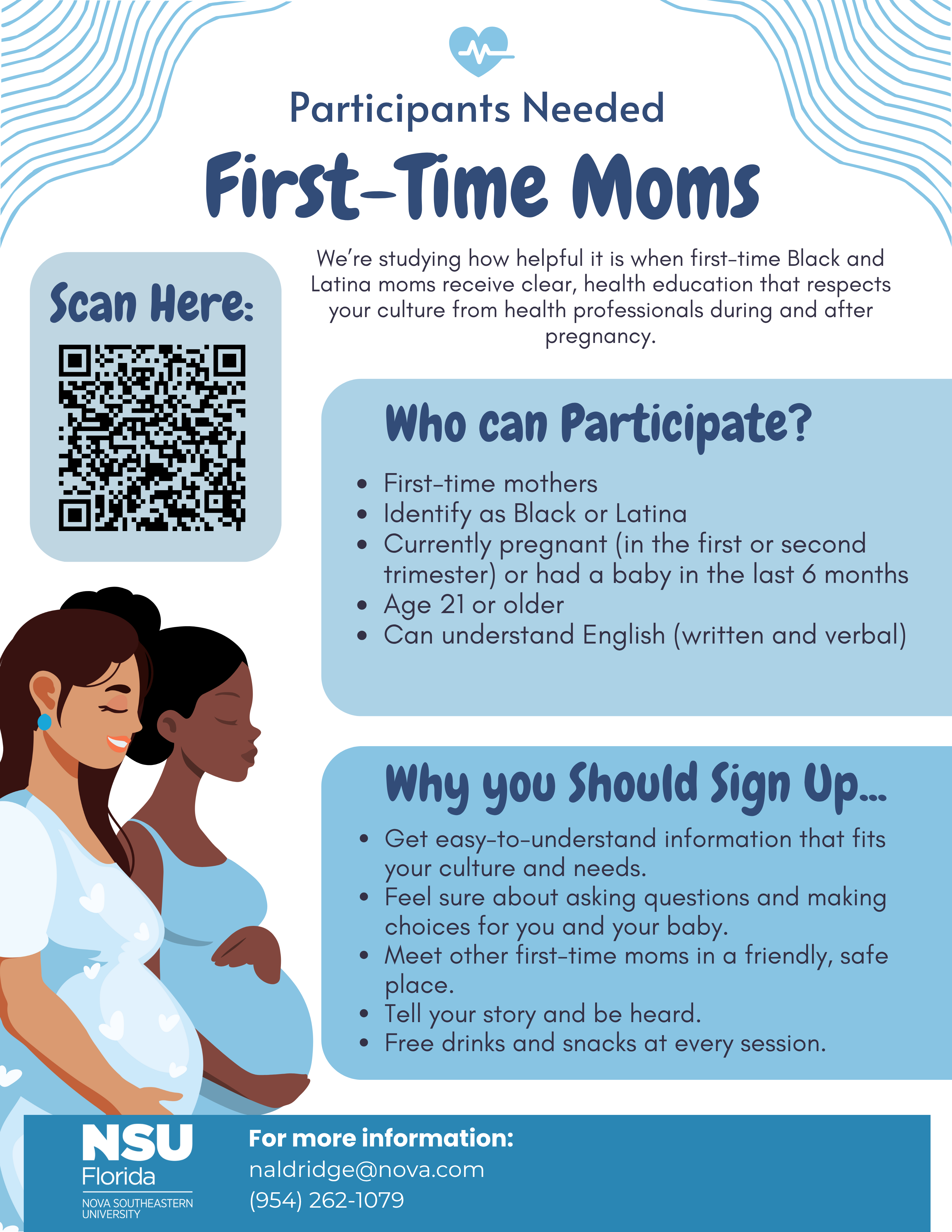
Effectiveness of Occupation-Based Interventions for First-Time Mothers During the Perinatal Period
This research study is designed to support first-time mothers during and after pregnancy. The goal of this study is to explore how culturally relevant health education can improve maternal health outcomes and empower first-time mothers. Therefore, helping those to navigate the healthcare system and care for their well-being.
What’s involved?
A brief survey (about 5 minutes)
If you live in South Florida, you may also be invited to attend two free workshops in Miami or Fort Lauderdale, featuring:
- Small group discussions
- Expert-led sessions on family planning, mental health, self-care, and more
Eligibility criteria:
You may be eligible if you:
- Are a first-time mom, age 21 or older
- Identify as Black or Latina,
- Are in your first or second trimester, or have given birth within the past six months
- Live in the United States
- Can read, speak, and understand English
Contact: Research team, nsuotdmaternalhealth@gmail.com; Dr. Nardia Aldridge, OTR/L, naldridge@nova.edu or 954-262-1079
Recruitment ends: 1/30/2026
Improving Maternal Mental Health in Military-Affiliated Pregnant Women: Effectiveness of a Smart Bassinet
This study is comparing two bassinets and how it affects infant and maternal sleep and the impact on maternal mental health in military-affiliated pregnant women.
Eligibility criteria:
Military-affiliated pregnant women.
Contact: shine@uccs.edu
Recruitment ends: 12/31/2027
Predictors of the Mother-Infant Bond
This study explores the relationship between maternal attachment style, parity (number of children), race, and motherhood expectations in predicting the mother-infant bond. Participation involves completing an anonymous online survey that takes about 15–20 minutes. Findings will help clinicians and researchers better understand factors that strengthen the early parent-child relationship.
Eligibility criteria:
Participants must be mothers, age 18 or older, with at least one child under the age of 12 months.
Contact: qadris2@montclair.edu
Recruitment ends: 5/31/2026
Grounded Theory Study on Emotional Safety During Perinatal Care Interactions among South Asian, Southeast Asian, and Pacific Islander Childbearing Women and People in the United States
The study focuses on asking South Asian, Southeast Asian, and Pacific Islander childbearing women and people what makes them feel safe during their perinatal care experiences (during pregnancy, labor, birth, and after birth). This study consists of two 1:1 virtual sessions: 1) an interview and 2) art journaling.
By understanding what safety means and feels like, this research can help form interventions to prevent emotional harm and promote equitable maternal health outcomes among South Asian, Southeast Asian, and Pacific Islander childbearing women and people.
Eligibility criteria:
1.) Self-identify as a South Asian, Southeast Asian, and/or Pacific Islander childbearing woman or person
2.) Received perinatal care and given birth in the United States
3.) At least 18 years old
4.) Speak English
Contact: Baomi Phung, btp6191@nyu.edu
Recruitment ends: 4/30/2026
Self-Determination Theory as a Framework for Exploring Motivation of Pregnant, Postpartum, and Nonpregnant Women to Participate in Group Fitness
The purpose of this study is to examine the relationship between women’s, and particularly pregnant and postpartum women’s, motivation toward exercise. Specifically, the study aims to examine women’s experiences of their group fitness environment and how such exercise environments may influence their psychological needs satisfaction and motivational orientations.
Eligibility criteria:
Women who are aged 18–40 years and currently participate in any type of group fitness (e.g., yoga, Pilates, bootcamp, barre, cycling, etc.).
Contact: Sabrina Madson, sabrina.madson@unt.edu
Recruitment ends: 12/30/2025
Improving Maternal Mental Health in Military-Affiliated Pregnant Women: Effectiveness of a Smart Bassinet Sleep Health and Mood in New and Expectant Military Mothers (SHINE) Study
This study is a 6-month, parallel-arm, randomized controlled trial. Pregnant women (N=342) in the third trimester will be randomized to use a smart bassinet (SB) or a standard commercially available bassinet (HALO BassiNest Swivel Sleeper 3.0; traditional bassinet [TB]) for up to 6 months after delivery. Participants will have their infants sleep in the bassinet, complete monthly web-based questionnaires, and record sleep data with diary and actigraphy for both the participants and their infants for 1 week each postpartum month. Blood samples will also be collected at baseline (late pregnancy) and at 3 months and 6 months postpartum to assess immune functioning. The primary outcomes for this study will be postpartum mood (depressive and anxiety symptoms) and infant and maternal sleep. In addition, we are evaluating whether SB has a significant impact on immune functioning—a marker that physiologically connects sleep and mood symptoms.
Eligibility criteria:
Pregnant military-affiliated women (active duty or spouse).
Contact: shine@uccs.edu
Recruitment ends: 11/30/2027
Predictors of the Mother Infant Bond
This study explores the relationship between maternal attachment style, parity (number of children), race, and motherhood expectations in predicting the mother-infant bond. Participation involves completing an anonymous online survey that takes about 15–20 minutes. Findings will help clinicians and researchers better understand factors that strengthen the early parent-child relationship.
Eligibility criteria:
Participants must be mothers, age 18 or older, with at least one child under the age of 12 months.
Contact: qadris2@montclair.edu
Recruitment ends: 5/31/2026
Grounded Theory Study on Emotional Safety During Perinatal Care Interactions among South Asian, Southeast Asian, and Pacific Islander Childbearing Women and People in the United States
The study focuses on asking South Asian, Southeast Asian, and Pacific Islander childbearing women and people what makes them feel safe during their perinatal care experiences (during pregnancy, labor, birth, and after birth). This study consists of two 1:1 virtual sessions: 1) an interview and 2) art journaling.
By understanding what safety means and feels like, this research can help form interventions to prevent emotional harm and promote equitable maternal health outcomes among South Asian, Southeast Asian, and Pacific Islander childbearing women and people.
Eligibility criteria:
1.) Self-identify as a South Asian, Southeast Asian, and/or Pacific Islander childbearing woman or person
2.) Received perinatal care and given birth in the United States
3.) At least 18 years old
4.) Speak English
Contact: Baomi Phung, btp6191@nyu.edu
Recruitment ends: 4/30/2026
Self-Determination Theory as a Framework for Exploring Motivation of Pregnant, Postpartum, and Nonpregnant Women to Participate in Group Fitness
The purpose of this study is to examine the relationship between women’s, and particularly pregnant and postpartum women’s, motivation toward exercise. Specifically, the study aims to examine women’s experiences of their group fitness environment and how such exercise environments may influence their psychological needs satisfaction and motivational orientations.
Eligibility criteria:
Women who are aged 18–40 years and currently participate in any type of group fitness (e.g., yoga, Pilates, bootcamp, barre, cycling, etc.).
Contact: Sabrina Madson, sabrina.madson@unt.edu
Recruitment ends: 12/30/2025
Improving Maternal Mental Health in Military-Affiliated Pregnant Women: Effectiveness of a Smart Bassinet Sleep Health and Mood in New and Expectant Military Mothers (SHINE) Study
This study is a 6-month, parallel-arm, randomized controlled trial. Pregnant women (N=342) in the third trimester will be randomized to use a smart bassinet (SB) or a standard commercially available bassinet (HALO BassiNest Swivel Sleeper 3.0; traditional bassinet [TB]) for up to 6 months after delivery. Participants will have their infants sleep in the bassinet, complete monthly web-based questionnaires, and record sleep data with diary and actigraphy for both the participants and their infants for 1 week each postpartum month. Blood samples will also be collected at baseline (late pregnancy) and at 3 months and 6 months postpartum to assess immune functioning. The primary outcomes for this study will be postpartum mood (depressive and anxiety symptoms) and infant and maternal sleep. In addition, we are evaluating whether SB has a significant impact on immune functioning—a marker that physiologically connects sleep and mood symptoms.
Eligibility criteria:
Pregnant military-affiliated women (active duty or spouse).
Contact: shine@uccs.edu
Recruitment ends: 11/30/2027
More Than Grief: The Biopsychosocial Crisis of Infertility
This study will help us learn how to improve counseling interventions for infertility by identifying the knowledge, skills, and dispositions necessary to provide competent infertility counseling. We hope that by understanding the lived experiences of infertility counselors, the challenges they face, and the qualities they possess to be successful, this study will help to inform future training and development in counseling for infertility.
Eligibility criteria: Licensed Professional Counselors
Contact: Stephanie Smith, Stephanie.l.smith@ttu.edu
Contact: Stephanie Smith, Stephanie.l.smith@ttu.edu
Recruitment ends: 12/31/2025
Clinician Attitudes and Experiences Working with Maternal Rage
Research Study for Maternal Health Professionals on Maternal Rage: We are interested in learning more about attitudes and experiences working with maternal rage as a presenting concern. If you are a maternal health professional, please consider taking our survey to share your experiences so we can develop better training and interventions to address this common issue.
Eligibility criteria: Clinicians or healthcare professionals working with mothers at any point during their motherhood experience (from any field/discipline). Must be over age 18.
Complete the survey here: https://redcap.pcom.edu/surveys/?s=R8KEE48KCXFFLW9R
Contact: Alexa Bonacquisti, PhD, PMH-C, alexabo@pcom.edu
Learn more: Please see this blog post, Mom Rage: Causes, Ways to Cope, and Reasons for Hope by Nicole McNelis, M.Ed., NCC, LPC, PMH-C.
Recruitment ends: 4/23/2026
The ROSE Scale-Up (ROSES-II) Study: Informing a Decision About ROSE as Universal Postpartum Depression Prevention
The ROSES II study is seeking pregnant people throughout the US to participate in a study that offers free virtual screening. Some participants will receive a no-cost virtual support group for pregnant people. The groups bring together pregnant people to learn ways to best prepare for being a parent of a newborn. All participants will receive $60 if all study interviews are completed.
Eligibility criteria: Individuals who live in the US and are 18 or older, between 12 and 32 weeks pregnant, and understand and speak English, have access to a telephone, can make video calls, and have access to stable internet.
Learn more and sign up: ROSES II Study Information Form
Contact: Chris Huff, huffchr5@msu.edu, project coordinator
Recruitment ends: 8/31/2026
Healthcare Equity in the Context of Perinatal Mental Health and Polycystic Ovarian Syndrome
A doctoral student at East Tennessee State University is conducting a study examining people’s experiences during the postpartum period. The purpose of this study is to understand how interactions with healthcare providers affect reproductive and perinatal health. Participants will complete a brief, anonymized online survey that should take no more than 30-60 minutes to complete. As this survey concerns topics such as reproductive health, healthcare experiences, and postpartum experiences, you may be asked sensitive questions related to these topics. If you feel discomfort or are distressed by the survey questions, resources are provided below and will be available at the end of the study.
Eligibility criteria: Those over 18 who live in the US and have given birth within the last 12 months. Participants are not required to have PCOS to participate in the study.
Complete the survey here: https://redcap.link/pwgrjw8t
Contact: Shalini Venkat, venkat@etsu.edu
Recruitment ends: TBD
Johnson County Doula Program
The Community Doulas provide culturally sensitive, accessible, and comprehensive support to birthing individuals and their families living in Johnson County, Iowa, free of charge. Our work is rooted in promoting positive health outcomes and empowering families through every stage of pregnancy, childbirth, and postpartum recovery.
We provide:
Prenatal support: pregnancy and childbirth education and preparation, resources, hands-on comfort measures, and tools for pregnancy and labor.
Labor and birth support: continuous support during labor, helping families navigate healthcare settings, and advocating for their birth preferences.
Postpartum support: assistance with newborn care, breastfeeding support, emotional support, and connection to local resources for ongoing needs.
Our doulas proudly include Congelese, Sudanese, Ghana, Kenya, Guatemalan, Puerto Rican, and Latina community representation, with languages supported including Spanish, French, Lingala, Swahili, Fante, Twi, and Ga.
Eligibility criteria: Eligibility for the program consists of living in Johnson County, Iowa, and the ability to provide documentation to indicate the individual is low-income (example, Medicaid coverage).
Flyers: English, Spanish, French, Swahili
Contact: con-doulas@uiowa.edu
Recruitment ends: 12/31/2026
Identity Continuity Following Maternal Mortality: The Life Stories of Widower Fathers
The purpose of this study is to understand how death due to pregnancy-related complications or complications co-occurring with pregnancy within the first year of birth impacts the lived experience of fathers and their families. Participants will be asked to give a life-story interview, including information about becoming and being a father throughout their grief and loss process.
Eligibility criteria: Participants of this study must be male individuals who are at least 30 years of age. Participants must have lost their spouse or partner in a committed relationship due to complications during pregnancy or complications co-occurring with pregnancy within the first year after birth. Participants must be at least two years removed from the event to the point of initial contact with the researcher. Participants must either be currently involved in the child’s life as a caregiver or have been involved in the child’s life as a caregiver until 18 years of age, as evidenced by the participant’s self-report. Finally, participants must speak English and must be willing to share their stories about becoming and being a father.
Contact: Leo Balseiro, MS, LMHC, NCC, BC-TMH – Leo.balseiro@mymail.barry.edu – (786) 879-0635
Recruitment ends: 12/31/2025
Quality of Prenatal Care, Provider Preference, and Preeclampsia among African American Women in Georgia
This study seeks to examine the experiences of African American women who have used obstetricians, midwives, and doulas during pregnancy and aims to provide valuable insights to enhance the care and support provided. Participants are invited to contribute to this important research by completing an anonymous online demographic and quality of prenatal care questionnaire.
African American women. Aged 18 -40. Have given birth within the last five years. Reside in the geographical locations of interest (rural or suburban Georgia). The study will include both those who had preeclampsia and those who did not have preeclampsia. Have chosen obstetricians, midwives, or doulas for prenatal care. WOMEN WHO DEVELOPED ECLAMPSIA WILL BE EXCLUDED FROM THE STUDY.
Contact: LyTeasha Bass, lyteashabass@gmail.com
Recruitment ends: TBD
Perinatal Health Among Persons with Disabilities
The purpose of this study is to better understand what types of stress women with disabilities experience during pregnancy and after their babies are born. For this study, we are particularly interested in any experiences of mental health concerns (e.g., depression, anxiety, PTSD) or experiences of violence or abuse (e.g., physical, emotional, sexual). This study, funded by the National Institutes of Health, will help us improve the care we provide during pregnancy and after giving birth to persons with disabilities. Volunteers will be asked to participate in one virtual interview (~45-60 minutes), and you will be compensated for your time.
Qualified Participants: You may qualify if you have a disability or a disabling condition (vision, mobility, intellectual, learning, or psychological) or are Deaf or hard-of-hearing; are 18 years of age or older; are pregnant or have had a child in the last 24 months; are experiencing/ have experienced difficult intimate relationships and/ or mood disturbances
Contact: Casey Johnson, disabilityandpregnancy@gmail.com
Misura della Comprensione del Corpo (BUMPs) durante la Gravidanza
Le proponiamo di aderire ad un sondaggio on-line il cui scopo è quello di rilevare le Sue personali opinioni e decisioni riguardo i cambiamenti fisici e psicologici che avvengono durante la gravidanza. Lo studio fa parte di un progetto più ampio che coinvolge l’Università di Messina (Responsabile scientifico: Prof.ssa Valentina Cazzato) e l’Università di York (Responsabile scientifico: Dott.ssa Catherine Preston) in Gran Bretagna ed è stato approvato dal Comitato Etico dell’Università di Messina e dell’Ateneo dell’Università di York. Questa Ricerca si propone come obiettivo quello di esaminare e convalidare la traduzione di una scala di misura che cattura l’esperienza del cambiamento del corpo femminile durante la gravidanza. Un nostro ulteriore obiettivo è quello di capire in che modo importanti segnali corporei (per esempio il battito cardiaco), percepiti durante la gravidanza, sono legati alla consapevolezza del proprio corpo, al benessere, al tono dell’umore, alle scelte di allattamento, alla tipologia di parto che si vuole adottare e alle paure legate al parto. Il periodo prenatale può essere vissuto come un periodo molto emotivo.
Elisa Mangano: elisa.mangano@studenti.unime.it
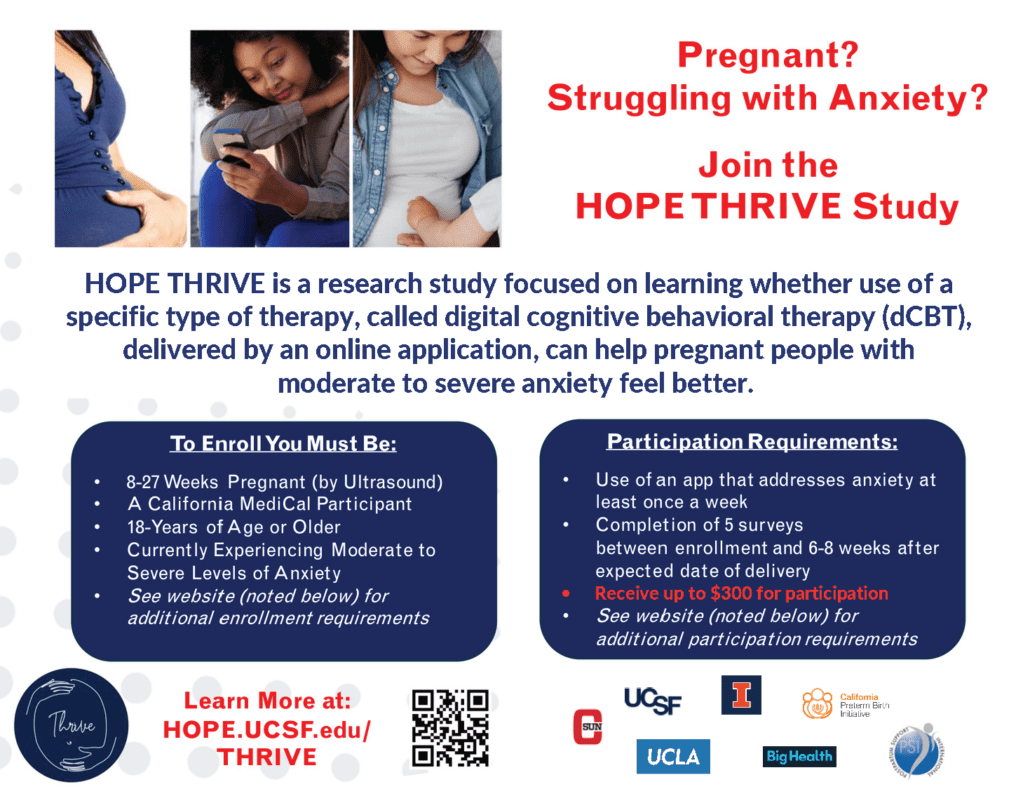
HOPE THRIVE Study
HOPE THRIVE is a research study focused on learning whether use of a specific type of therapy, called digital cognitive behavioral therapy (dCBT) delivered by an online application, can help pregnant people with moderate to severe anxiety. HOPE.UCSF.edu/THRIVE
Product Development Research (Company-Sponsored)
A Study to Assess the Safety and Efficacy of Oral LPCN 1154A in Women with Severe PPD

The purpose of this research study is to test the study drug, LPCN 1154A, as a possible treatment for postpartum depression (PPD). The trial aims to determine:
1) If LPCN 1154A reduces depressive symptoms in subjects with severe PPD
2) How well LPCN 1154A is tolerated, and what side effects it may cause
3) If LPCN 1154A reduces anxiety symptoms in subjects with severe PPD
Key Inclusion Criteria:
1) Are female between 15 and 45 years of age, inclusive;
2) Have had a depressive episode that began no earlier than the third trimester and later than the first 4 weeks following delivery
3) Are < 12 months postpartum at Screening
4) Hamilton Depression Rating Scale (HAM-D) 17-item score indicative of severe depression
Key Exclusion Criteria:
1) Have a history of bipolar disorder, schizophrenia or schizoaffective disorder
2) Are currently experiencing active psychosis per Investigator assessment
3) Have a history of suicidal behavior within 1 year
4) Have a history of seizure within 6 months of Screening
Contact: Josh Weavil, jw@lipocine.com
Recruitment ends: 4/15/2026
Do you want help recruiting for a research study?
If you have a research project relating to pregnancy, postpartum, or post-loss mental health, you can submit a request for us to include a summary of your project and a call for enrollment. Fill out the form here to submit your project for review.
If you have additional questions, please contact communications@postpartum.net.